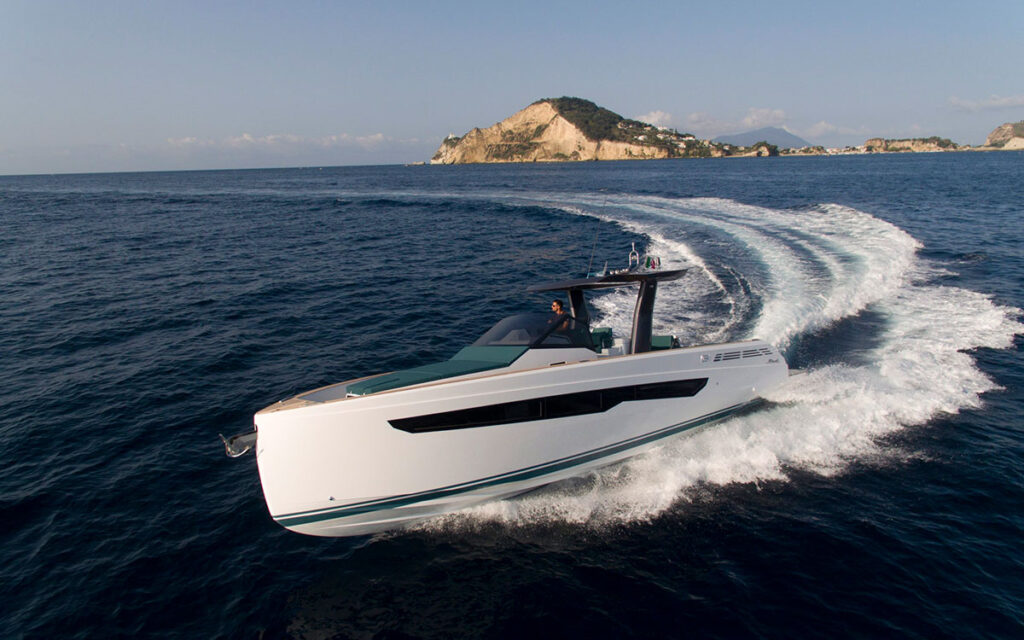
The designation “Phlegraean Fields”of the area north-west of Naples derives from the Greek (phlegraios=hard) and is a clear reference to the volcanic nature of the area, which has characterised it since the beginning of its history, when it was home to primitive peoples. But, in addition to the physical and natural characteristics of the place, it is the wealth of archaeological sites and evidence of the distant past that contributes to the charm of the Campi Flegrei.
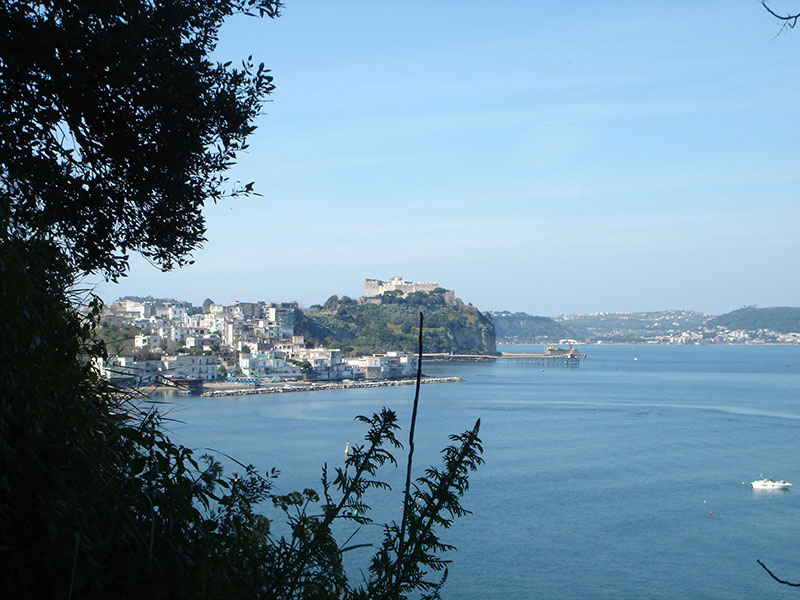
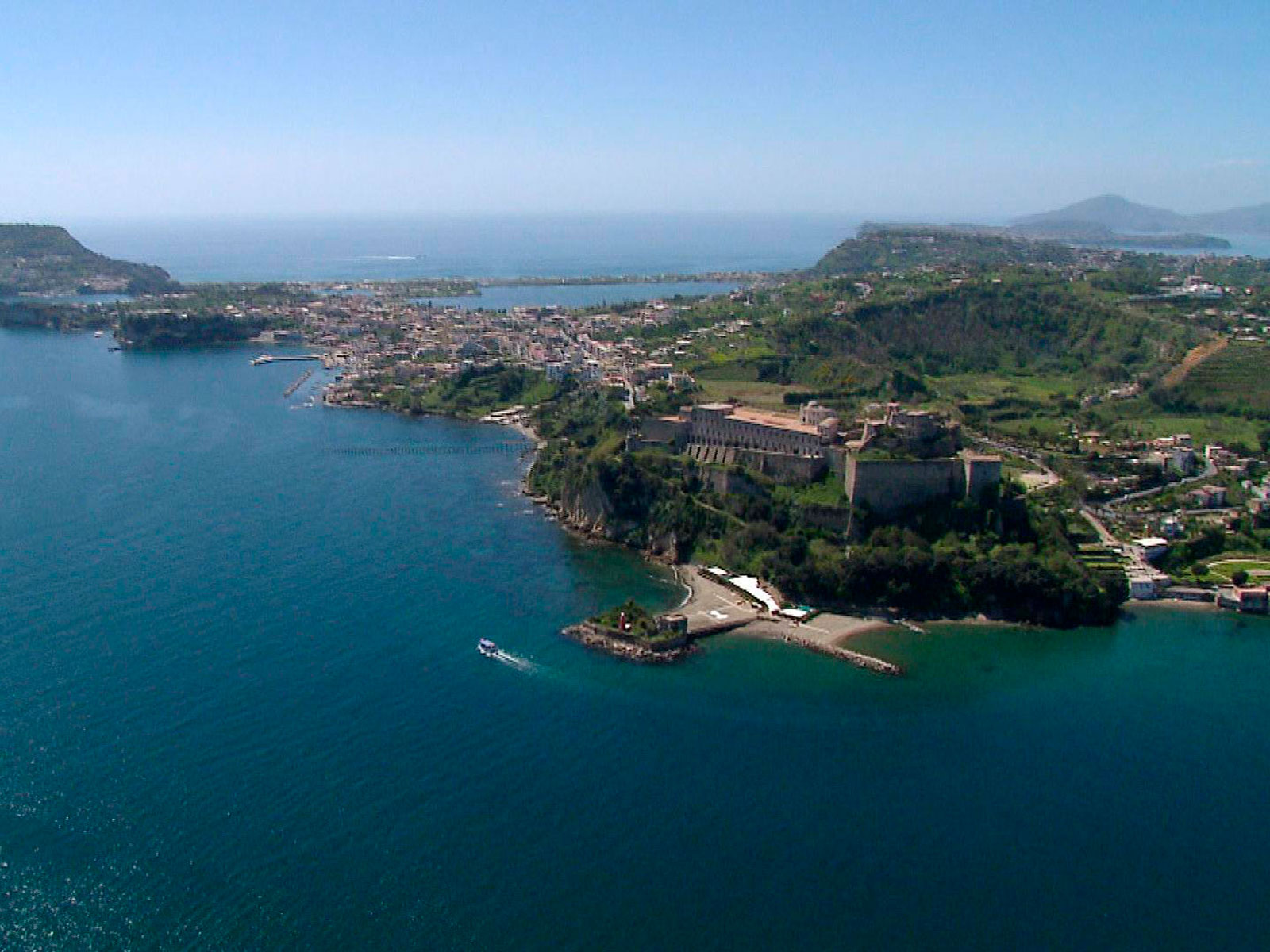
Before departure, or even upon return from the cruise, it deserves special attention to Bay, where you will find our construction sites where your holiday begins, overlooking the stretch of water below the ancient Aragonese castle. One more reason to choose Fiart rent's boat charter service!
The place is a succession of sites of historical interest, now identified as “Archaeological Park of Baia“, having been the favourite holiday resort of Roman emperors for years. A visit to the Palatium, residence of the emperors, is recommended, followed by a visit to the Baths of Mercury, the Temple of Venus and the famous Piscina Mirabilis.
After visiting the park, a ride to the Aragonese Castle completes the cultural itinerary: the Campi Flegrei Archaeological Museum, recognised as a museum of national interest, is located here.
Finally, for us sea lovers, the chance to admire a unique wonder: the Underwater Park of Baia! It is the only underwater archaeological site in the world.
The visit is accessible to all: divers and non-divers.
For the former there is the possibility of diving with an expert guide of the Campi Flegrei seabed, who will accompany them on a fascinating dive among the archaeological remains of the Submerged Park. The excursion, for which a fee is charged, requires compulsory booking.
The less experienced can snorkel and admire the fantastic mosaics of Portu Julius with only a mask.
Pozzuoli is the main town in the Phlegraean Fields: of Roman origin (Puteoli, “small wells”, was founded in the 2nd century B.C. on the site of the previous Cumaean settlement of Dicearchia), and was in antiquity more important and powerful than the nearby Neapolis. Pozzuoli owed its fortune mainly to its flourishing port, where trade and cultural exchanges with the East were intense, and the arts of glass, ceramics, perfume, textiles and iron were widespread.
In the heart of the city is the’Flavian Amphitheatre (the third in Italy), dating back to the end of the 2nd century B.C., in which gladiator games were held and which could accommodate about 20,000 spectators; the underground rooms, which were used for spectacular “special effects” and dynamic stage sets, can still be visited today.
Of great importance and beauty is then the so-called Temple of Serapis (the name is due to the discovery in the 18th century of a statue of the Egyptian god Serapis), which is in fact none other than the ancient Macellum (the market) annexed to the port area. The phenomenon of bradyseism, which affects Pozzuoli by periodically raising and lowering the ground level, has caused this place to sink and re-emerge from the water several times in the past: the signs of this, and the levels reached by the water, are evident on the columns of the temple.
As far as volcanic phenomena are concerned, the urban area of Pozzuoli, in addition to bradyseism, is characterised by the presence of the SolfataraThis is a real active volcanic crater with an elliptical shape, dating back some 4000 years, characterised by fumaroles, continuous vapour emissions and sulphurous exhalations, which on windy days even reach the city of Naples.
Pozzuoli also still preserves the ancient acropolis (the Rione Terra, which has recently undergone architectural renovation), the temples of Augustus and Neptune and the necropolis.
The origin of the city is set in the 8th century B.C., by the inhabitants of nearby Pithecusae (Ischia); Cuma soon became a flourishing and powerful city, extending its hegemony over the Phlegrean and Neapolitan territories, but it began to lose importance when Puteoli and its port assumed a fundamental role in the Roman Empire. Cumae then had to downsize greatly and remained relevant only as a place of worship, due to the presence of the’cavern of the Sibyl.
The Sibyl was the legendary priestess of Apollo - also mentioned by Virgil in the Aeneid - who, in her cavern, formulated omens and foretold the future. The cavern in which, according to myth, she received those who questioned her, is a mysterious and fascinating place: it is a long (131 m) corridor with a trapezoidal cross-section, 2.5 metres wide and 5 metres high, carved into the tuff and lit by six lateral openings, leading to a final arched room.
In the vast and rich archaeological area of Cumae, there are, among other things, the remains of the Temple of Jupiter (a 5th century BC Greek temple, later converted into a Christian basilica) and the Temple of Apollo (which legend has it was built by Daedalus, who arrived here at the end of his fabulous flight from Crete).
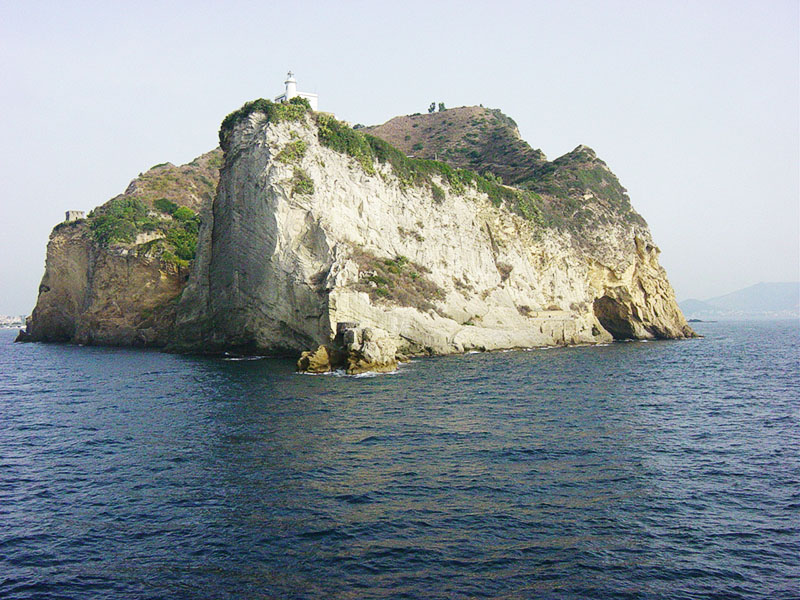
The headland of Cape Miseno, which closes the Gulf of Pozzuoli to the north-west, was a strategic outpost for the Roman fleet, especially in the Augustan age, when the Tyrrhenian naval base was installed here. The lighthouse operating here is an important aid for navigation in the narrow Procida Channel.
North of the Cape, there is the port of Miseno, connected by a canal to the lake of the same name. A formidable testimony to Roman times is the Mirabile Pool, a huge reservoir dug out of the tufa rock to collect water from the Serino aqueduct, and intended to supply the fleet stationed in this area.
Fiart Rent S.r.l.
Via Lucullo n. 71
80070 | Baia | Naples
VAT N. IT07123801214
Fiart Rent S.r.l.
Via Lucullo n. 71
80070 | Baia | Naples
VAT N. IT07123801214