Adriatic Coast ItinerariesBefore discovering all its wonders, we recommend visiting Lecce, soul of Salento, its history palpitates in the various monuments in stile Baroque and Lecce stone or in the small Greek churches, the Carlo V Castle and the various museums (the “Sigismondo Castromediano”, the 'Cartapesta' and the Diocesan Museum).
SAN CATALDO
A destination for diving enthusiasts for the beautiful seabed rich in marine fauna and above all for the presence on the seabed of remarkable ancient artefacts and a series of submerged ruins of the ancient Porto Adriano, including the “submerged church”. Near San Cataldo you can visit the Oasi Naturale delle Cesine.
AQUAVIVA COVE
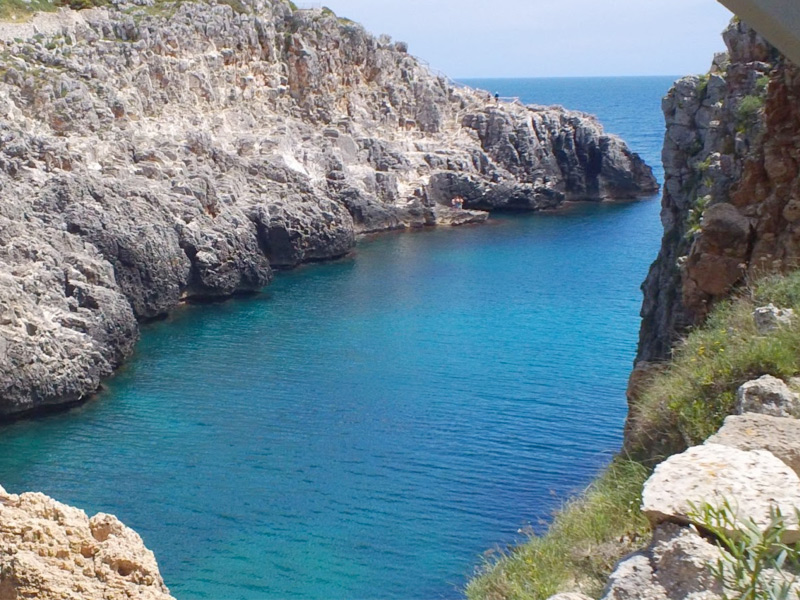
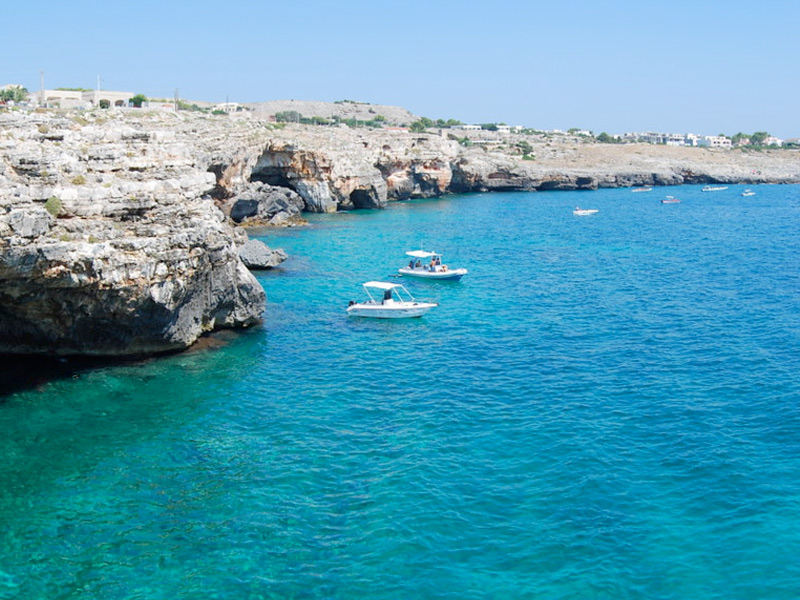
Named for the presence of polle of cold water spring, it is a fjord sandwiched between Castro and Marina Marittima, a beautiful harbour on a stretch of coastline characterised by vertiginous rocks, caves and an emerald sea.
SAN FOCA
Home to the Tourist Port, one of the most important for those sailing from Salento to Greece, it has been awarded the 2015 Blue Flag and the 5 sails by Legambiente. It therefore deserves a dip in its waters and a visit to the Cave of the Lovers, consisting of two rooms communicating by means of a narrow tunnel, the two lovers are said to have been locked up, and the tunnel joining the two cavities is said to have been dug, according to popular tradition, by their uninterrupted and desperate tears.
TRICASE PORT
It dates back to the 1400s and is still protected by the Torre del Sasso, built to defend the village from attacks by the Turks and Saracens. A second marina for pleasure boats has recently been added. Not to be missed: - Fish Festival, 12 August - Feast of St Nicholas, 13 August, sea procession and fireworks.
OLD ROCA
Where history joins the enchantment of nature. Qhere the presence of mankind can be traced back to the origins of mankind in the Bronze Age (2nd millennium B.C.), the subsequent Iron Age (1,000 years B.C.) and the Messapic Age (4th century B.C.). The medieval settlement dates back to the 14th and 16th centuries with the castle, a watchtower and ancient walls. The Grotta della Poesia “grande” and the Grotta della Poesia piccola, among the most sensational natural pools in the world, show the very ancient use of the site with symbols and inscriptions of Messapian origin, Greek and Latin, are part of the broader archaeological park of Roca Vecchia.
BEAR TOWER
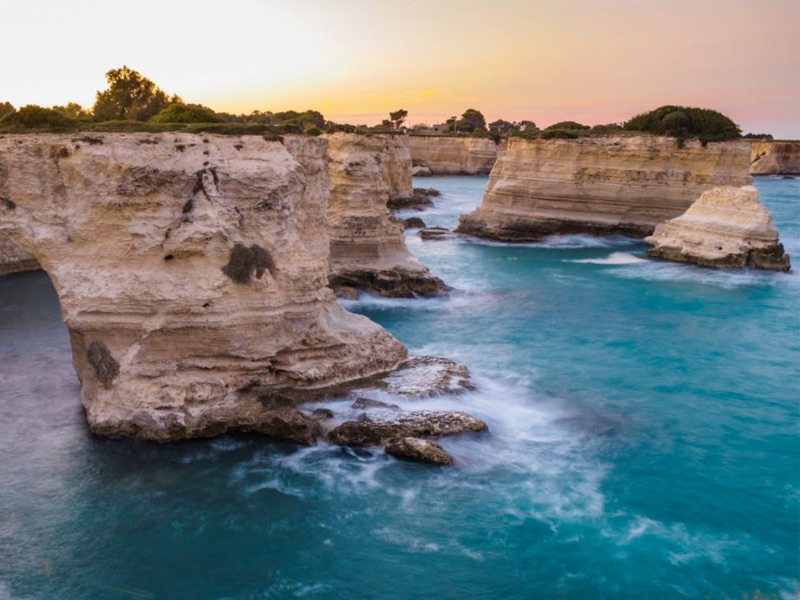
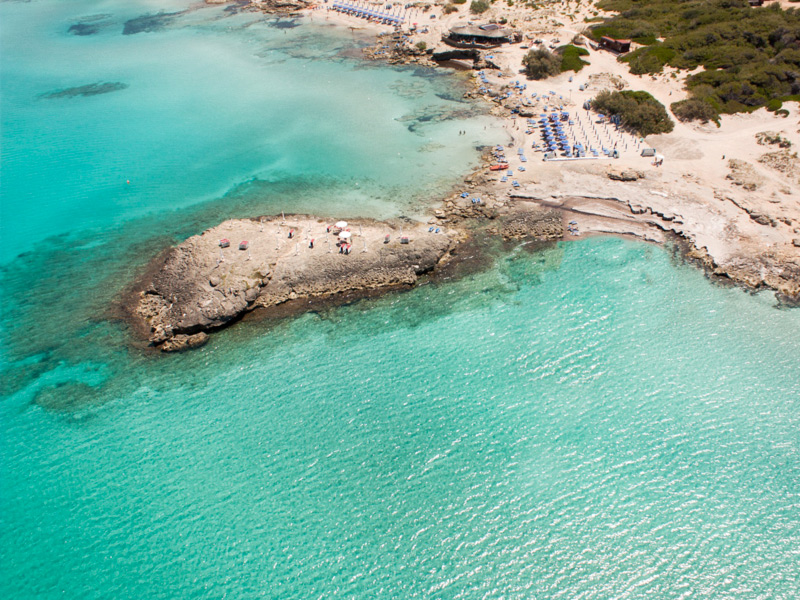
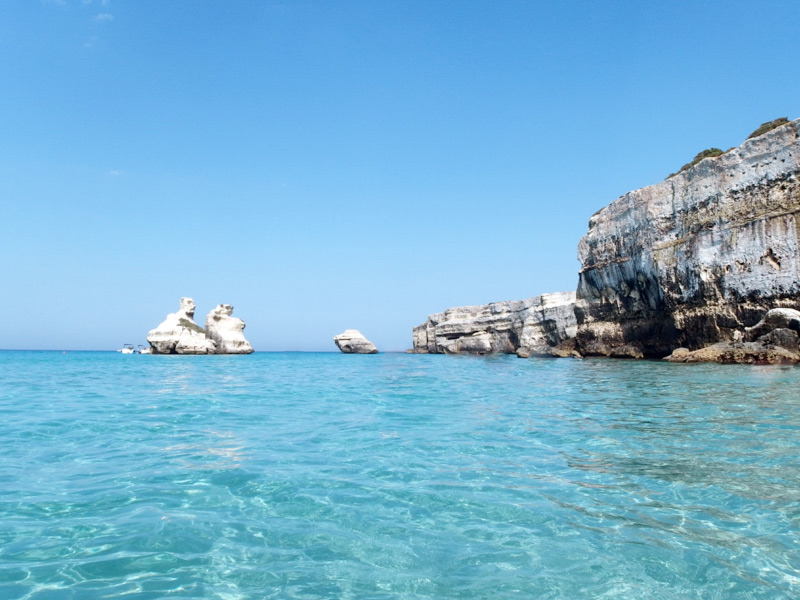
A bay with crystal-clear water, always calm sea, it holds the Blue Flag and Five Sails Legambiente title. Also known for its beach of fine silver-coloured sand and two famous white stacks located at the southern end of the bay, called The Two Sisters. Legend has it that two sisters jumped off a cliff into the stormy sea, unable to reach the shore. The Gods out of compassion turned them into the two striking stacks. In the caves one can admire graffiti in Latin and Greek, testimony to the faith of the ancient sailors.
BAY OF TURKS
Just before Otranto and at the end of the Bay of Alìmini the bay opens up with its dunes, pine forests and crystal clear sea. The landing of the Ottoman fleet that besieged Otranto in 1480 took place on this stretch of coast.
OTRANTO
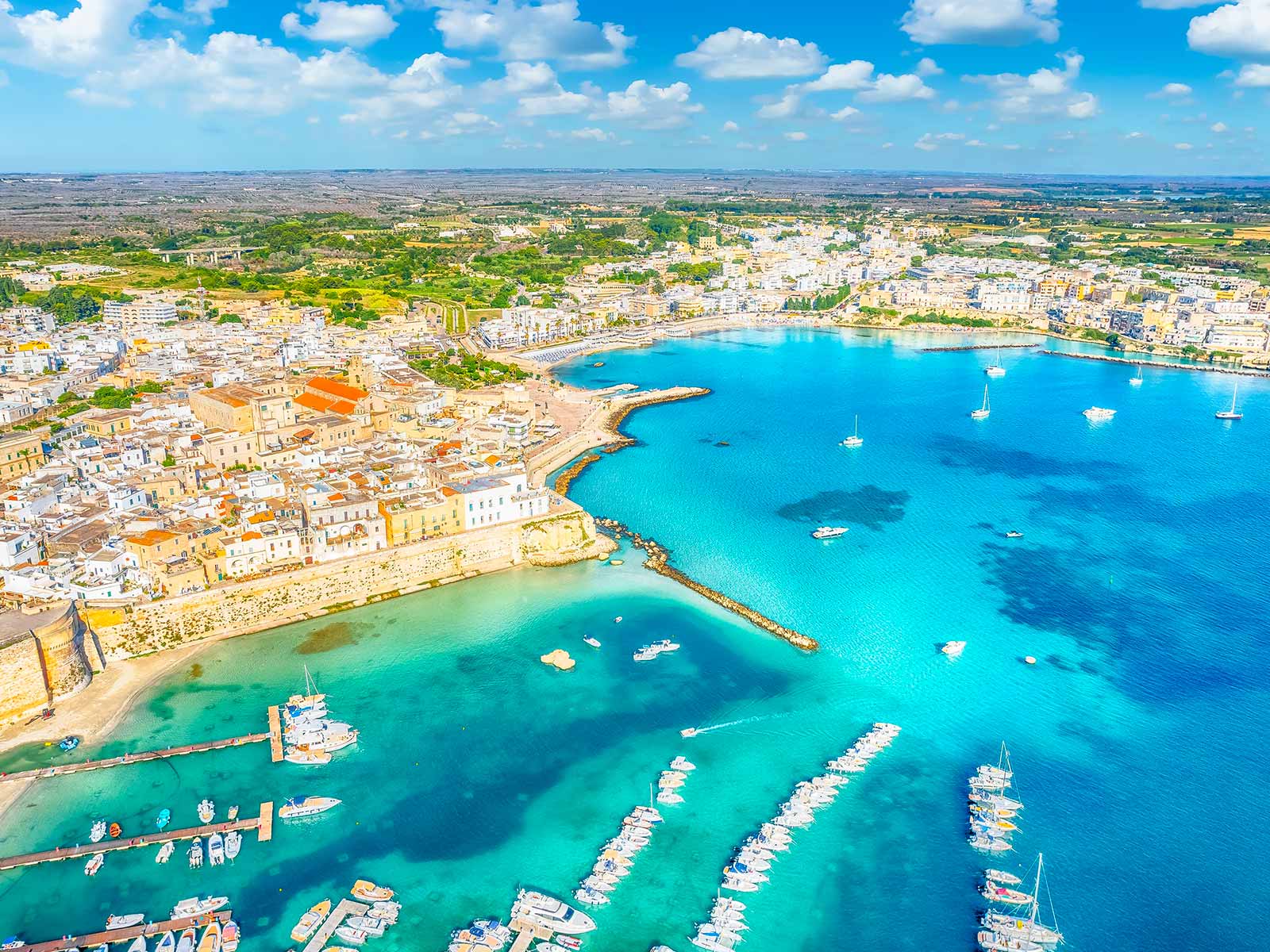
OTRANTO is the easternmost municipality in Italy: the cape of the same name, also called Punta Palascìa, to the south of the town, is the most easterly geographical point on the Italian peninsula. In Roman times, it was one of the most important maritime cities in Apulia. In 1480, the city was conquered by the Turks of Muhammad II, who massacred the population during the Battle of Otranto, killing 800 people: the blessed Idruntine Martyrs. A medieval jewel, the city's landmark monument is the Cathedral built in 1080. Inside is the Martyrs’ Chapel, which houses the relics of the 800 martyrs massacred in 1480 by the Turks. Another treasure kept in the church is the floor mosaic, a masterpiece depicting the Tree of Life, and considered by many experts to be an encyclopaedia of Christianity. On the outside, the Baroque portal with the 16-ray rose window from the late Gothic period stands out. In the historical centre, recognised as a UNESCO Cultural Heritage Site, enclosed within the mighty city walls, is the Aragonese Castle, dating back to 1485, with its cylindrical towers and traditional moat. A labyrinth of narrow streets and alleyways branches off from the castle square. Walking along these alleys gives the impression of being transported back in time, with the little houses, the stairways, the courtyards, the shops and the atmosphere of times gone by. Between one alley and the next, you reach the port, a historical theatre of landings and trade. Events include: - Feast of the Holy Martyrs of Otranto (31 July, 14 and 15 August) - Feast of Our Lady of the Altomare, sea procession, first Sunday in September - Otranto Film Fund Festival, mid-September - “Dawn of the Peoples”, during the festive season, almost a month of events of various kinds, to remind everyone that the first light of the new year comes to Italy from Salento, from Otranto.
PORT BADISCO
A small fjord that legend has it favoured the landing of Aeneas and his companions on their epic journey to Italy. A magical place, where a real precious pearl is kept: the famous Deer Cave, a fascinating and ancient underground complex considered among the most important in Europe. Inside, several wall paintings dating back to the Palaeolithic period have been found, depicting men stretching their bows, children, women and various animals, including deer.
THE CIOLO
The CIOLO is a high rocky inlet within which there are several sea caves of considerable historical and scenic interest, accessible only by sea. We recommend the Cave of the Prazziche, 40 metres long and 6 metres wide, inside which Neolithic artefacts, ceramics and even rhinoceros remains have been found; the Grotta Grande, also known as the Cave of the Spirits or Cave of the Sparrows, 30 metres high and 100 metres long, is characterised by the presence of a small lake that takes on different shades of colour from red to green. Inside it also has fresh water coming from a nearby underground spring.
SANTA CESAREA TERME
The precious sulphurous water springs from the four natural caves along the coast have made Santa Cesarea a major spa centre, chosen for its specialised medical cures and customised treatments. The symbol of the town is the Moorish dome of the 19th century Villa Sticchi, which looks like a small mosque clinging to the rocks. Not to be missed are the aristocratic residences including Villa Raffaella, Palazzo Tamborrino, overlooking the cliff, and Palazzo Gargasole, now home to the fascinating Clock Museum of the Civic Towers.